


A Souvenir Is Not a Product. It’s a Story.
There is a difference between buying something and choosing something.
Most travelers buy objects. The thoughtful few choose meaning.
A bottle of olive oil without context is simply oil. A jar of honey without origin is just sweetness in glass. A small decorative item without history is decoration — nothing more.
But when you know the story behind what you hold in your hands, everything changes.
The Problem With Generic Souvenirs
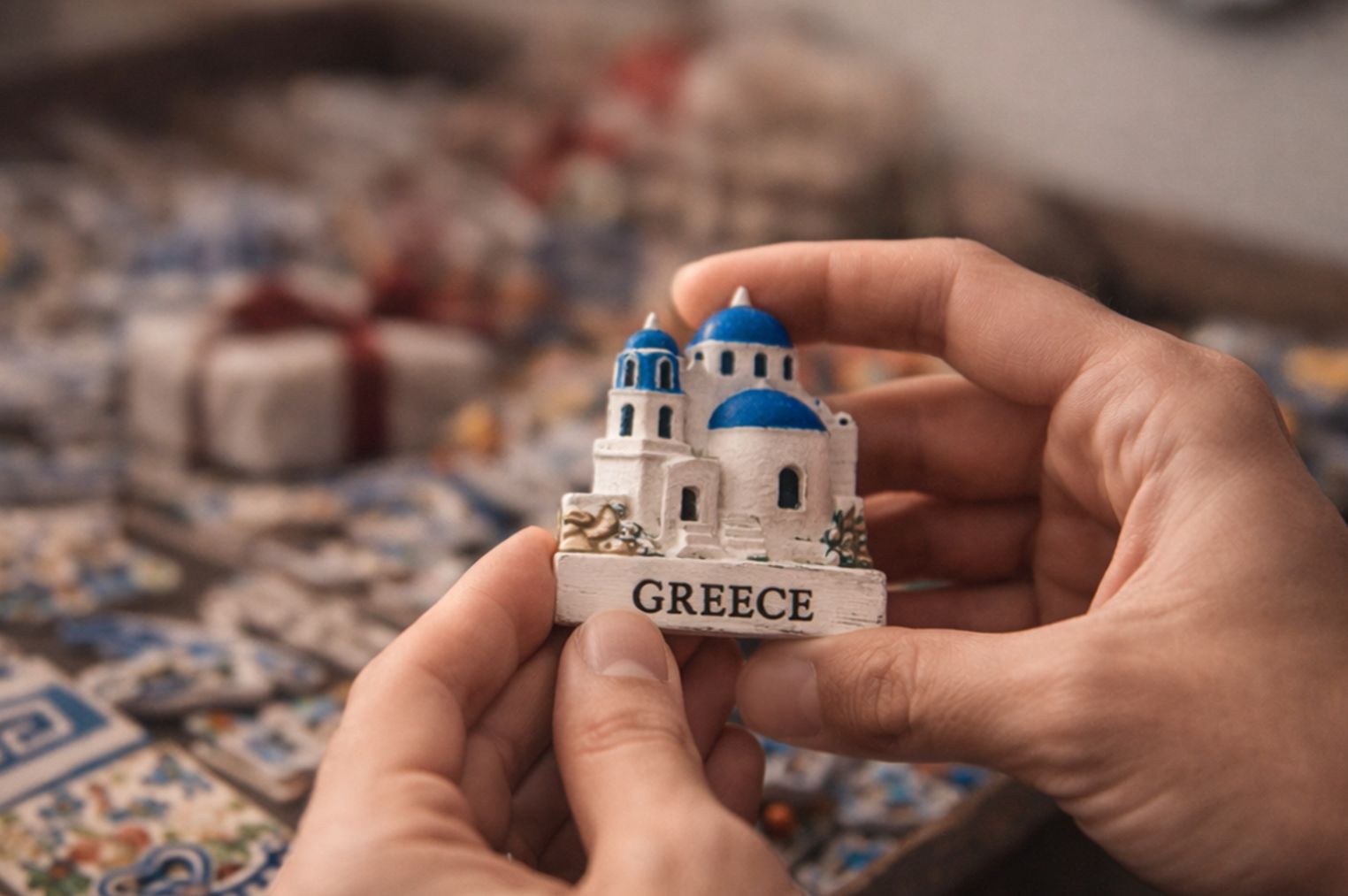
Mass-produced souvenirs are easy to find. They are convenient, affordable, and everywhere.
They are also forgettable.
Without story, without origin, without intention — they become objects that fade into drawers and shelves. They do not carry a place. They do not carry emotion. They do not carry memory.
Why Story Creates Value
 Story transforms an object into meaning.
When you share a gift and say:
- This olive oil comes from a small family estate overlooking the Aegean.
- This honey is harvested from wild thyme fields in the Greek countryside.
- This product represents a region, a tradition, a way of life.
You are no longer giving a product.
You are sharing a piece of Greece.
From Object to Experience
True souvenirs do not sit silently on shelves. They spark conversation. They carry emotion. They invite storytelling.
The value of a gift is not measured only by price. It is measured by the connection it creates.
Objects can be replaced. Stories cannot.
The New Standard of Thoughtful Gifting
Elegant gifting is not about quantity. It is about intention.
It is about choosing items that represent something real — a landscape, a tradition, a craft, a family, a culture.
When gifting becomes story-driven, it moves beyond transaction. It becomes experience.
Because a souvenir should never be just something you carry home.
It should be something worth telling.